
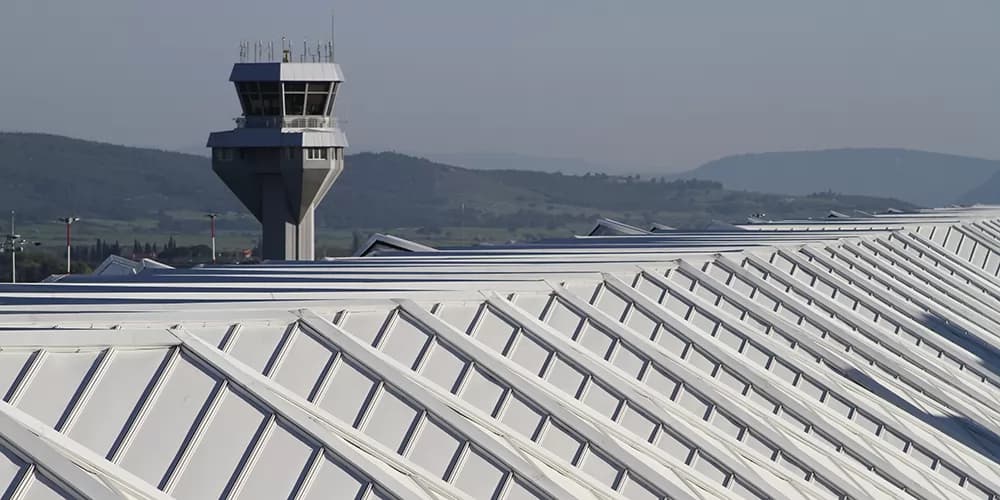
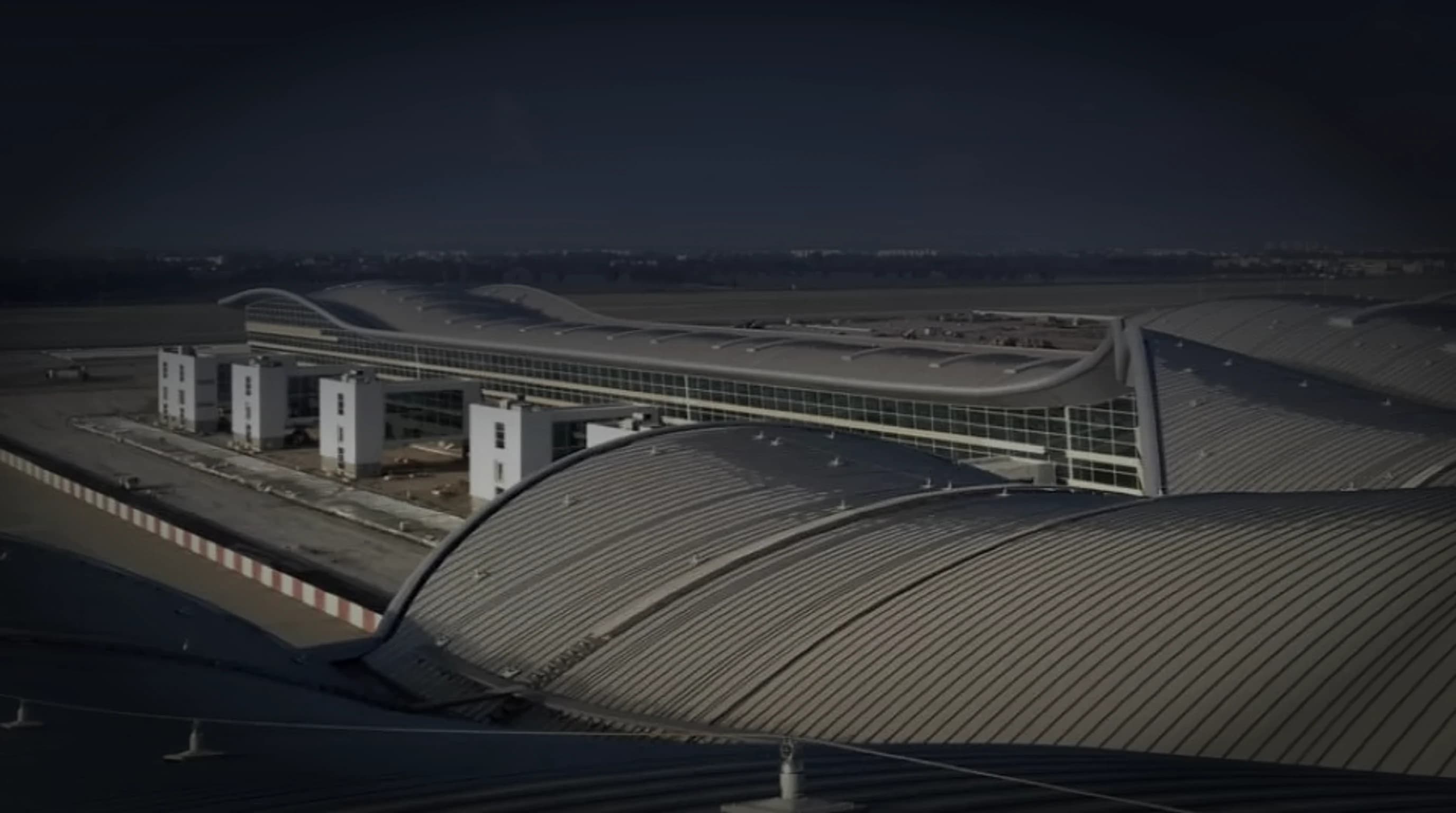
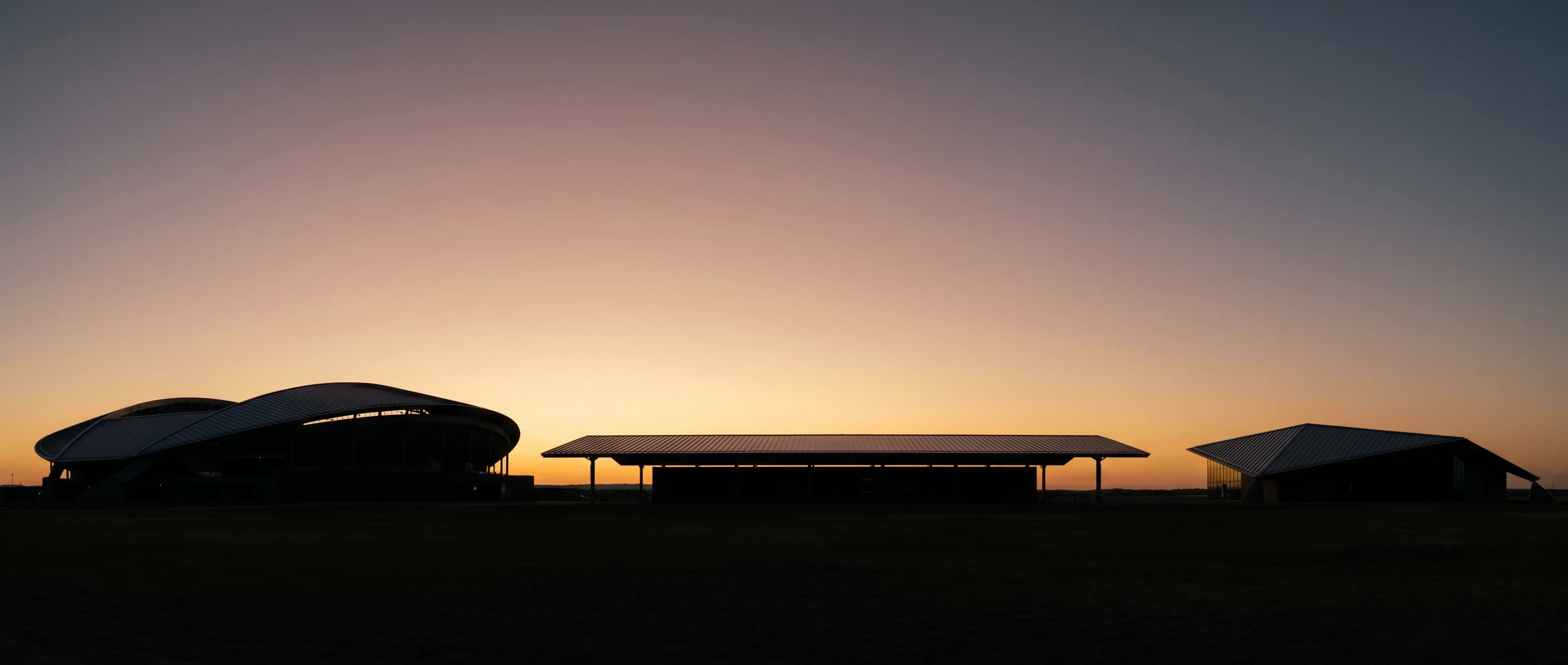
Algiers · Algeria
Houari Boumediene Airport
- Year
- 2007

Scale · Olympic spans
A single aluminium strip across the full span. No transverse joints. No perforations.
Riverclack SpA · Italy · since 1987
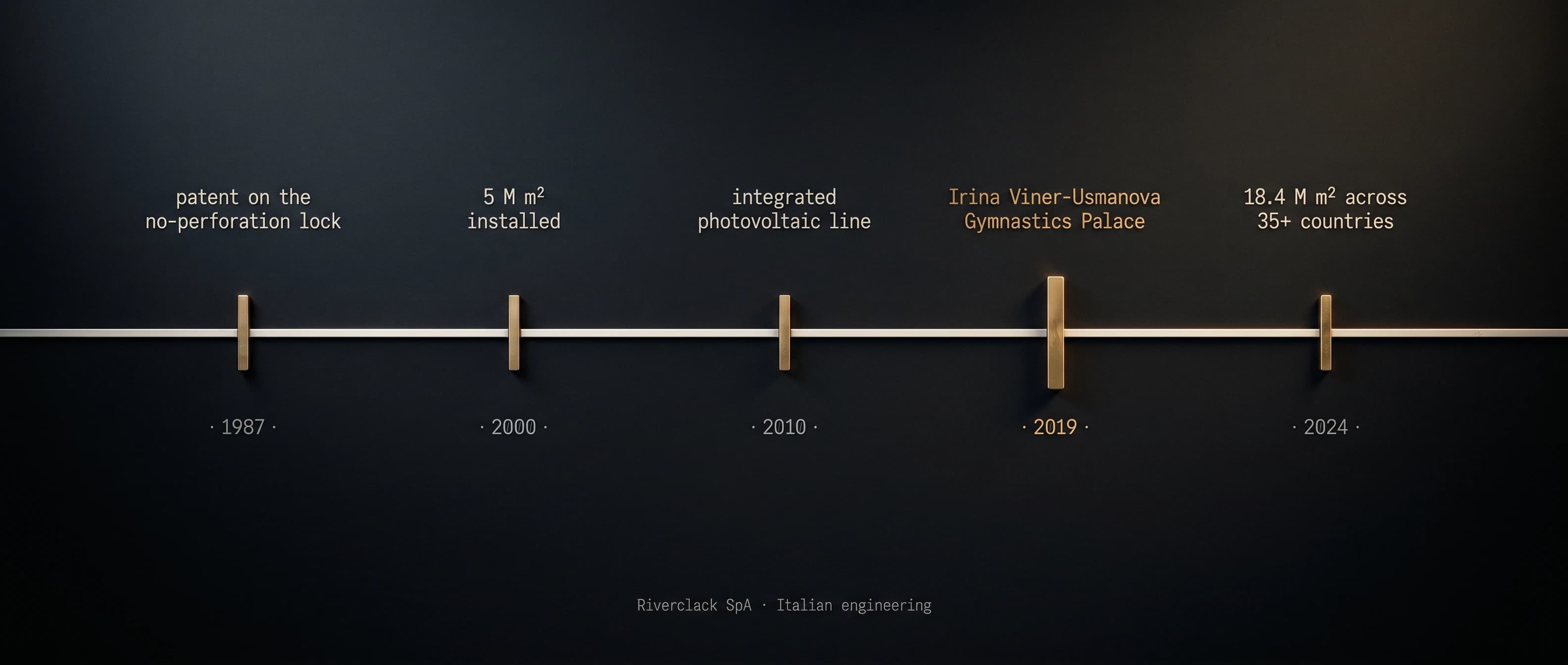
iverclack is an Italian manufacturer of standing-seam roofing systems. Since 1987 they have installed more than 18.4 million square metres of roofing across 35 countries using their patented lock geometry. Adjacent sheets are joined mechanically by an installer's foot. No screws. No rivets. No perforation of the metal.
Seven advantages
Riverclack is not a product range — it is a single lock geometry, applied across roofs, facades, photovoltaic and green-roof systems. Each consequence is a benefit for the architect, the contractor and the operator.
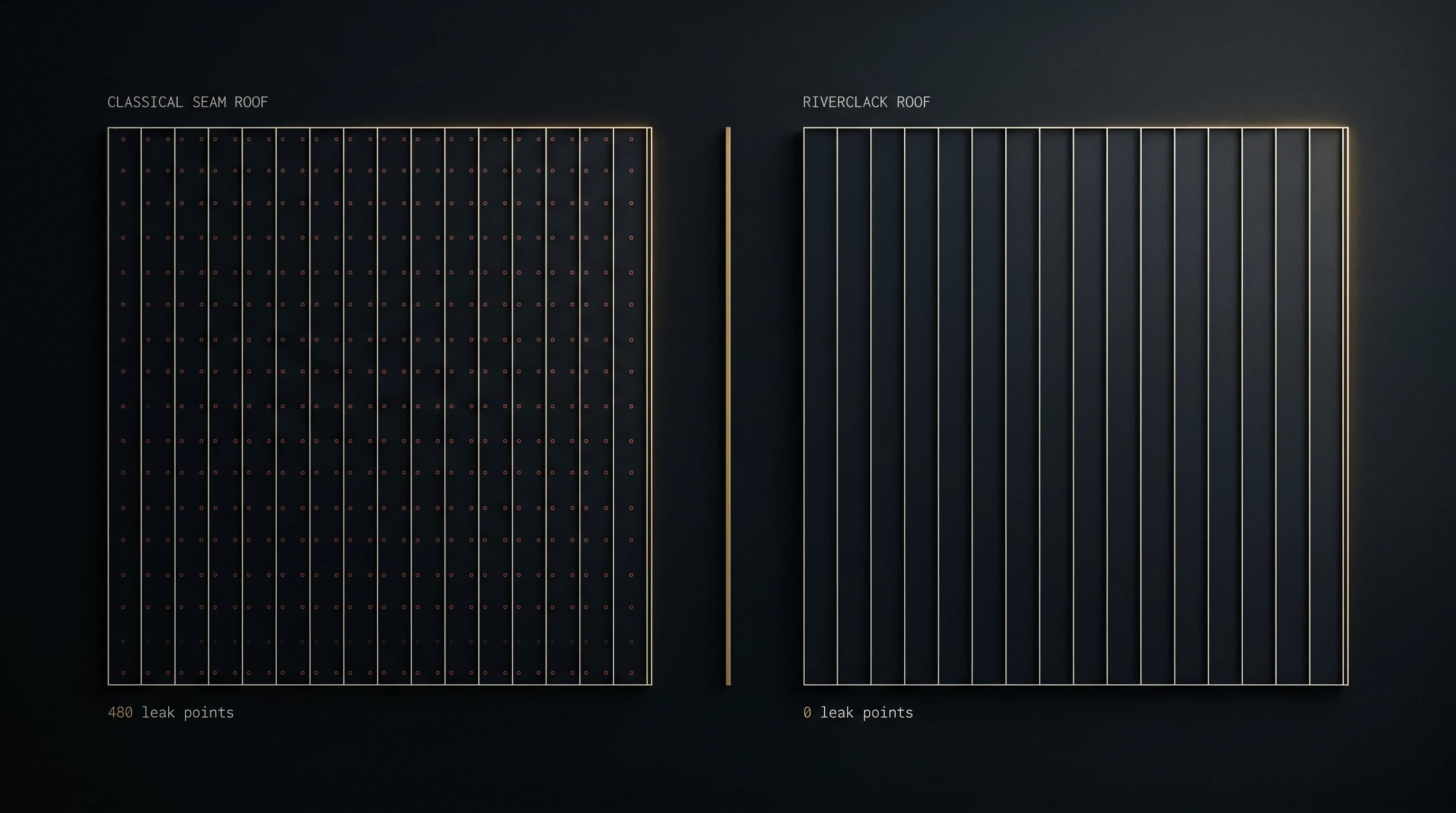
The Riverclack lock joins adjacent sheets through a hidden plastic clip — never through a screw, a nail or a rivet. The roofing blanket stays absolutely watertight across the entire surface, with no leak point at any seam.
Patented lock · zero through-fasteners
The Riverclack lock joins adjacent sheets through a hidden plastic clip — never through a screw, a nail or a rivet. The roofing blanket stays absolutely watertight across the entire surface, with no leak point at any seam.
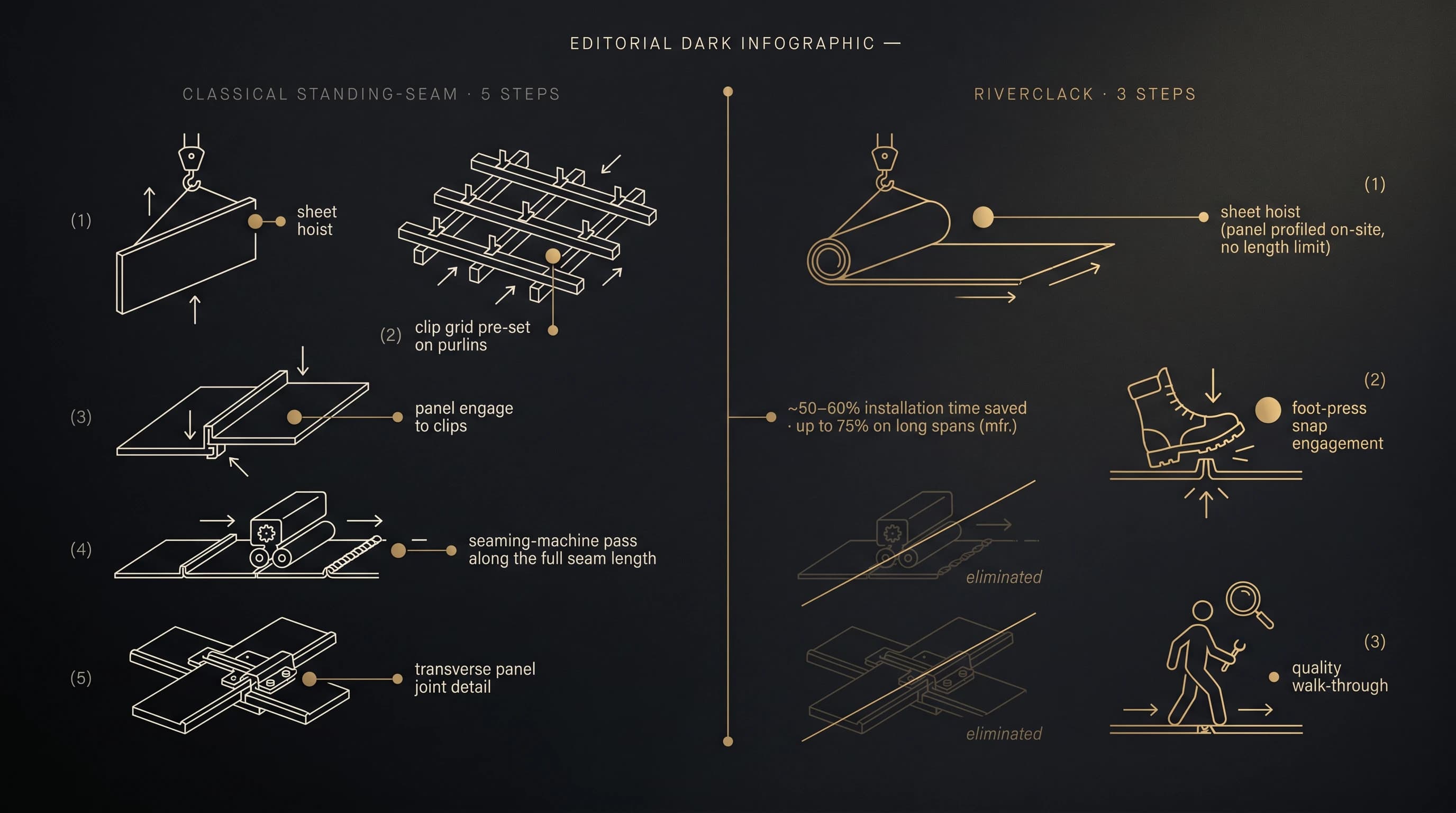
50–60% faster than mechanically-seamed standing-seam
The installer steps on the joint and the lock snaps closed. Three classical steps disappear: the seaming-machine pass, the pre-set clip grid, and the transverse panel joint. Typical savings are 50–60% of installation time vs mechanically-seamed standing-seam; the manufacturer cites up to 75% on long-span and complex roofs (riverclack.com).
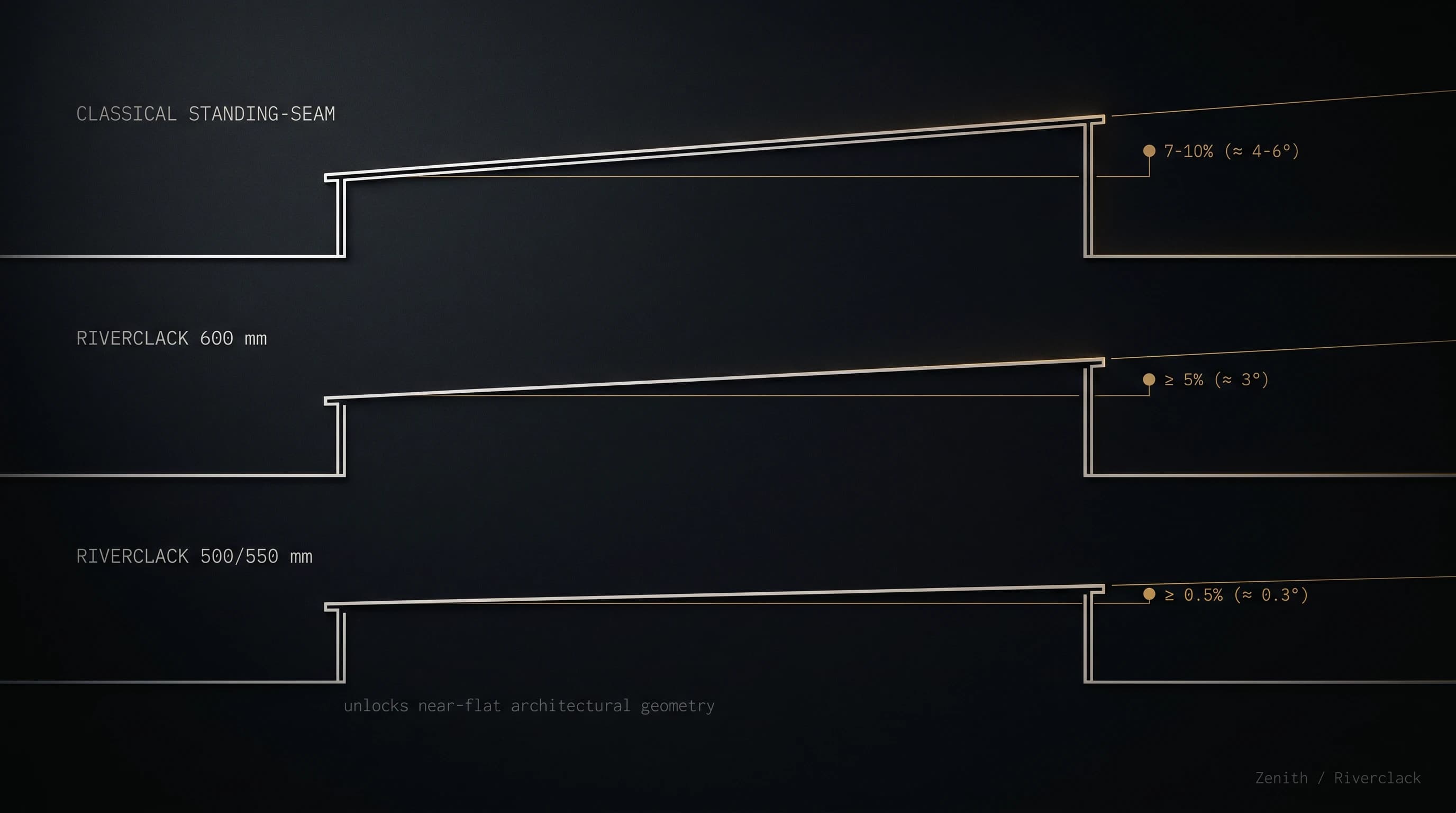
0.5% (500/550 mm) · 5% (600 mm)
The integrated drainage channel handles water at a 0.5% slope for 500/550 mm panels (the 600 mm sheet requires a 5% minimum) — where a classical standing seam would demand 7-10%. This unlocks contemporary near-flat geometry for stadiums, terminals and pavilions.
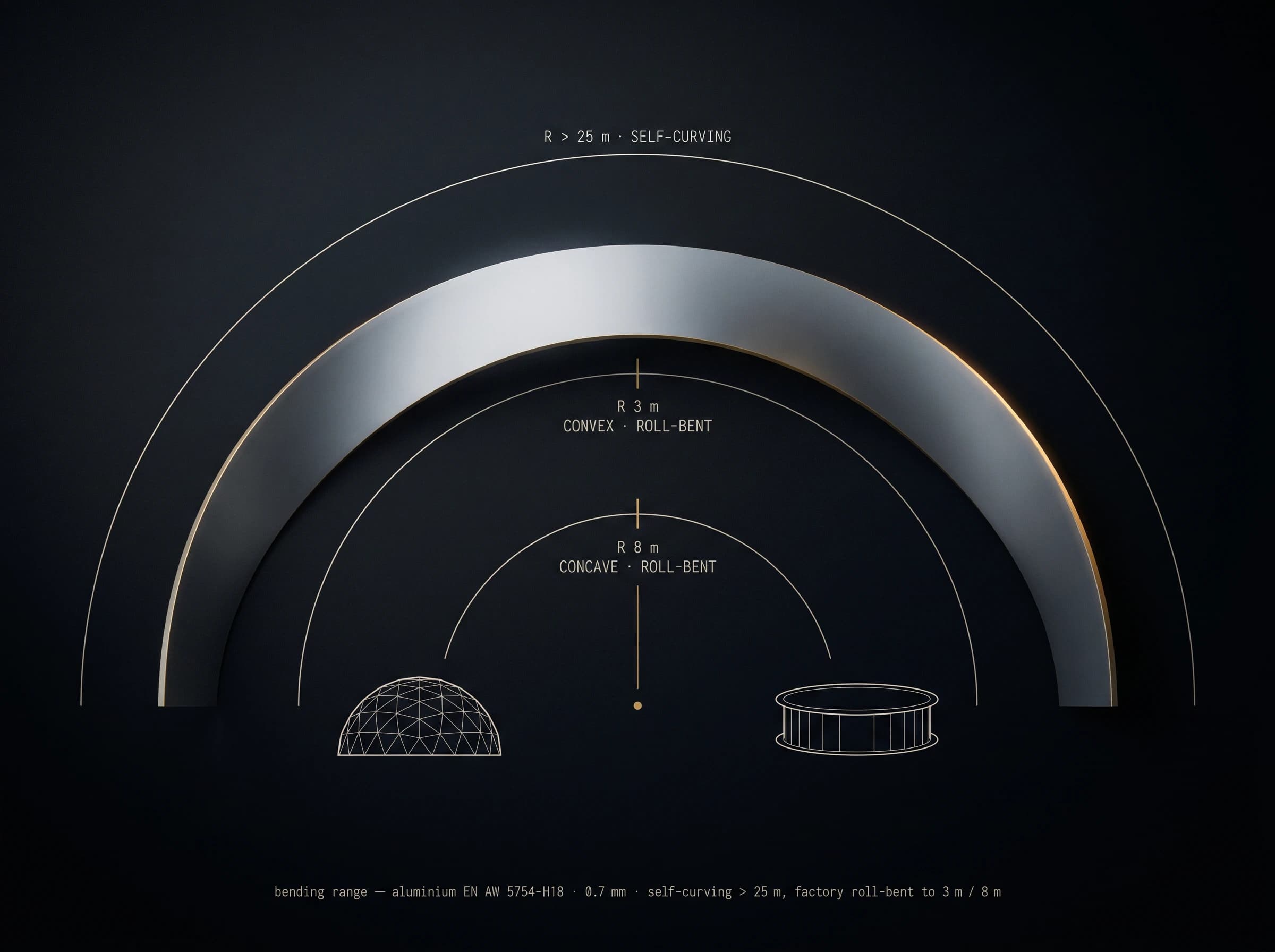
R 3 m convex · R 8 m concave
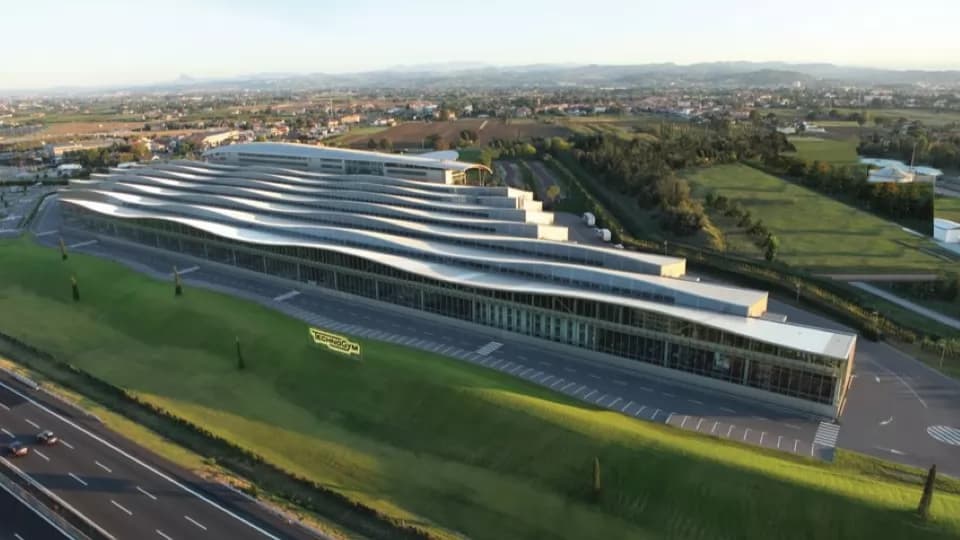
The 0.7 mm sheet self-curves without permanent deformation at radii above 25 m; for tighter geometries the panel is mechanically roll-bent at the factory down to R 3 m convex and R 8 m concave. Tapered sheets clad cones and domes. Roof and facade resolve into a single line of metal — no flashing strip, no expressed joint.
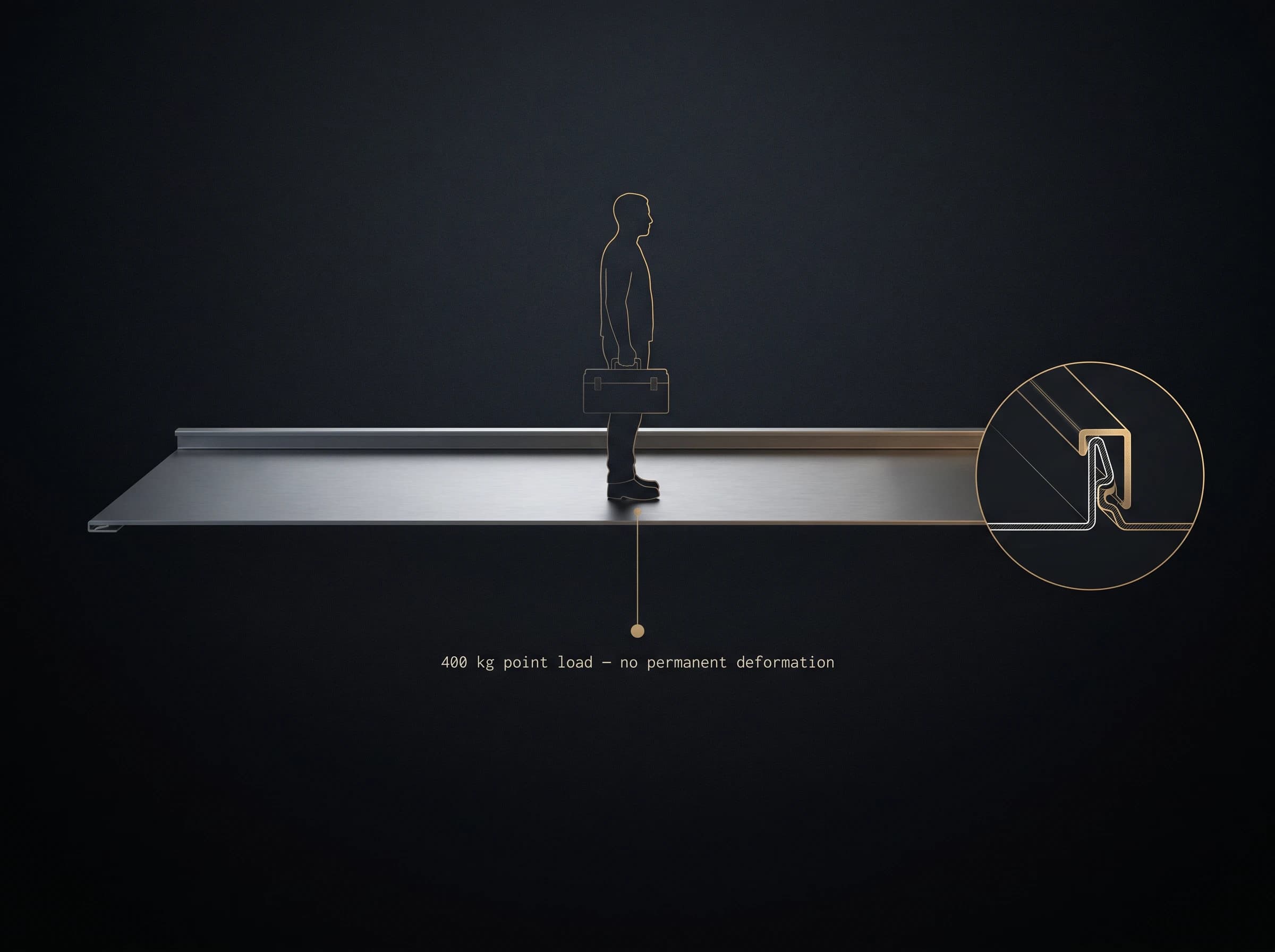
400 kg point load
The H18/H19 temper of the EN AW 5754 alloy gives the panel mechanical resistance both to cyclic foot traffic and to hailfall. Point load up to 400 kg — without permanent deformation. Service the PV array, clear snow, run cable trays — without dedicated walkways.
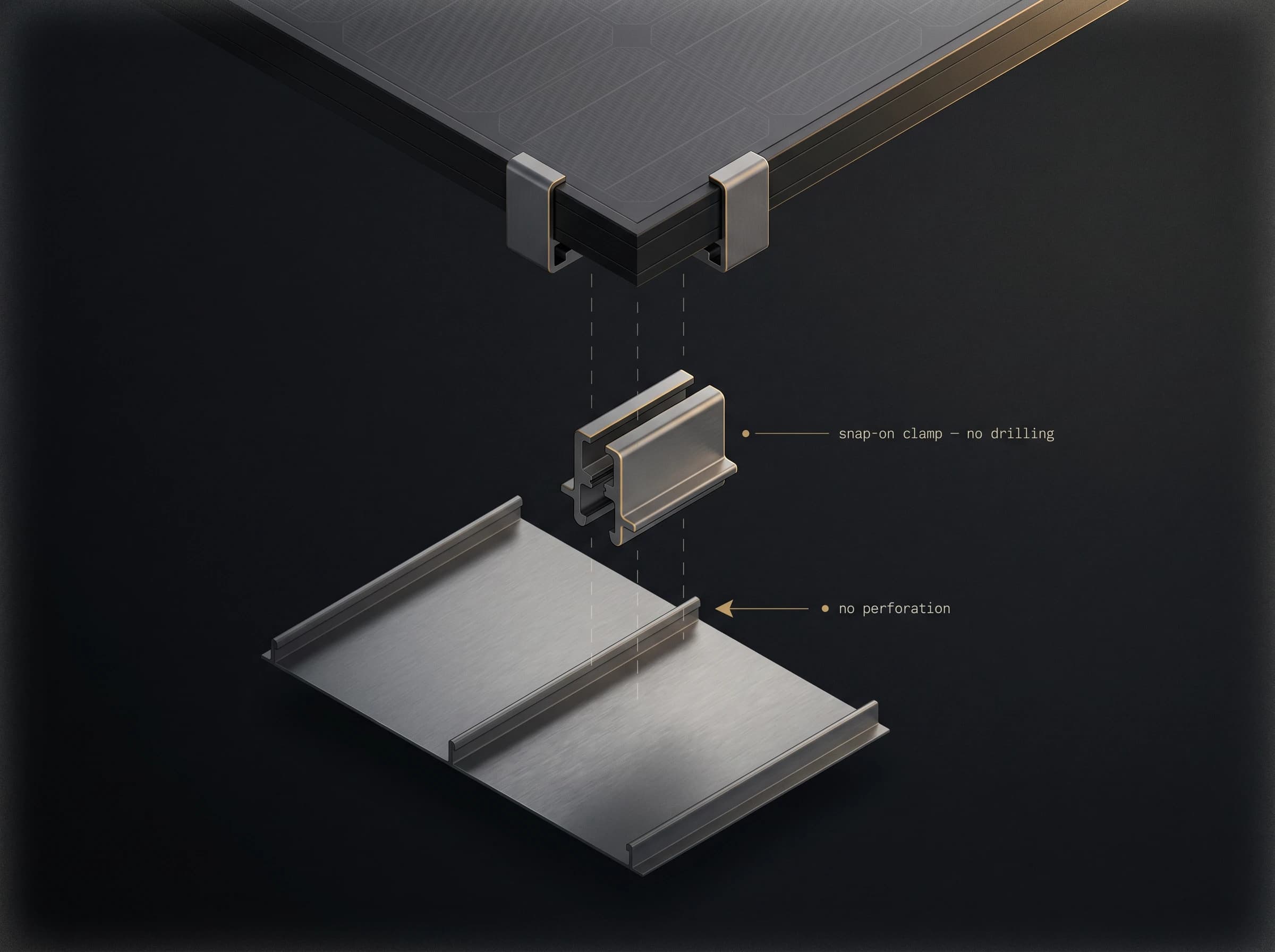
BIPV without perforation
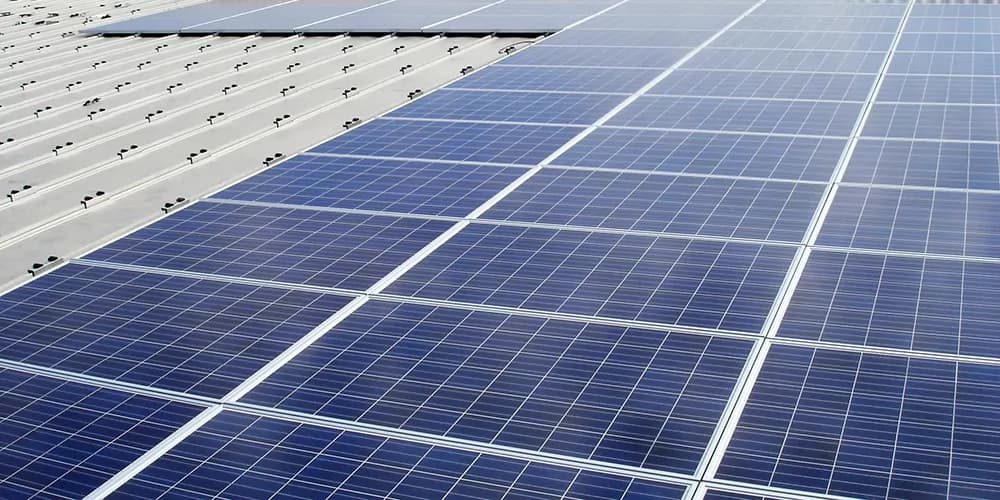
A profile clamp grips the seam from above and holds the PV module by its own clamping force. Not a single screw crosses the metal — the manufacturer's water-tightness warranty stays intact.
 Motion
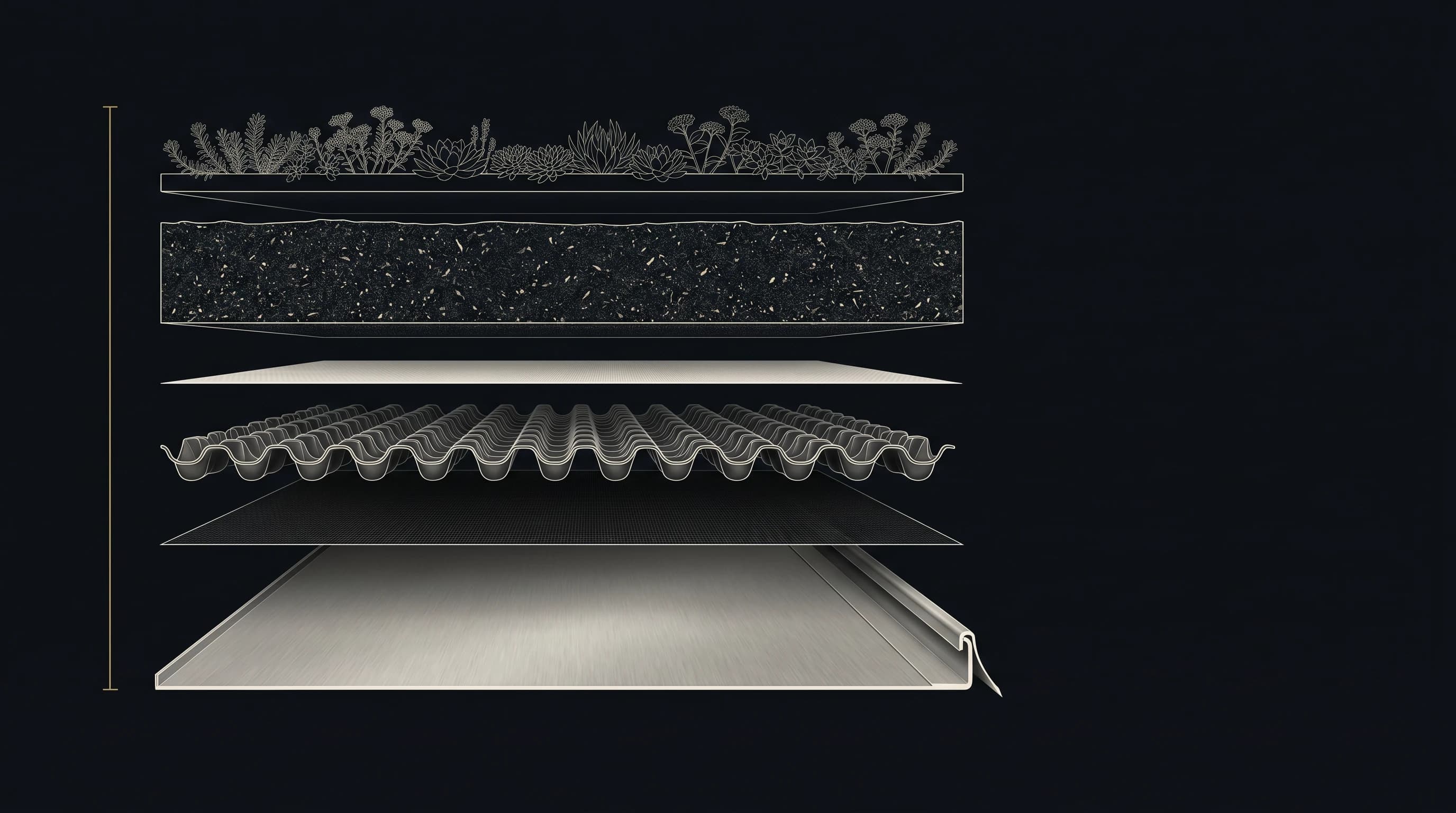
Trafficable green roof · no PVC/TPO membrane
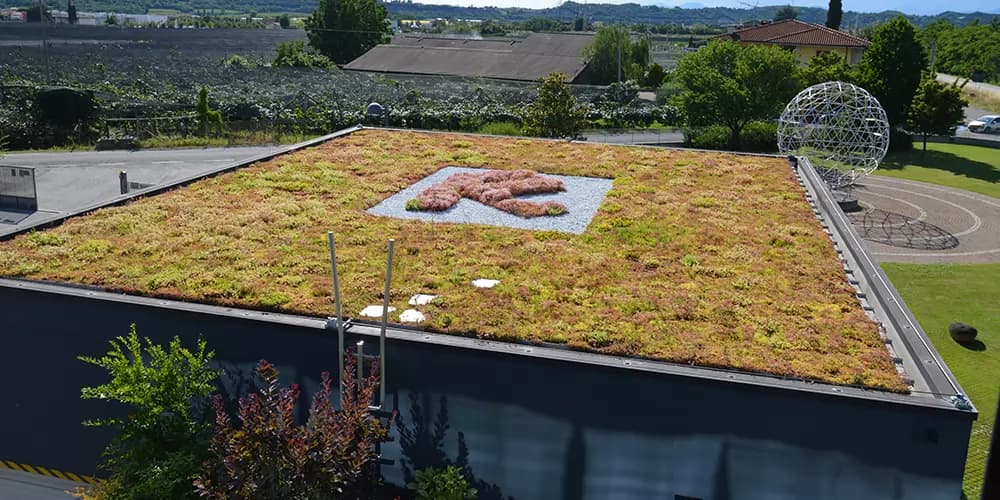
The standing-seam aluminium is the waterproofing layer — there is no polymer membrane to perish under the substrate. Build-up: root barrier, drainage reservoir, filter, growing medium, planting.
Italian engineering · since 1987
Riverclack SpA has held the no-perforation patent since 1987 and produces from Italy. The system has been installed on flagship public buildings on five continents — including Adnan Menderes Airport in İzmir.

Systems
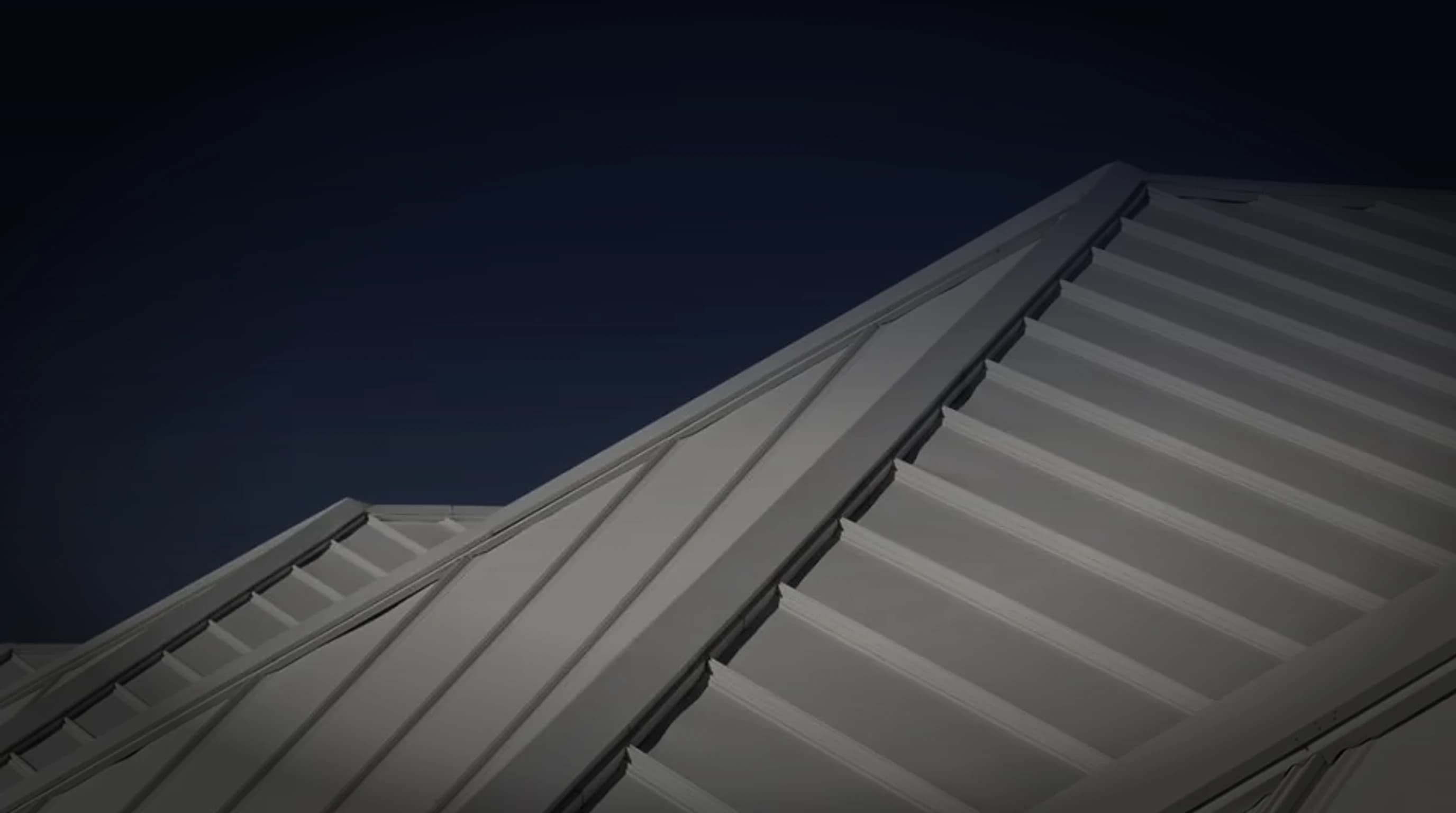
The same patented geometry across four architectural applications.
 Russia · Flagship
Türkiye · Flagship project
One of Türkiye's principal international gateways, in İzmir. The terminal roof is a continuous Riverclack aluminium standing-seam blanket across long spans, with no transverse overlaps and no through-perforation of the metal envelope. On-site panel roll-forming and Riverclack's patented hidden plastic clip with integrated drainage channel together made the roof deliverable as a single watertight surface across the full span. Terra-Zenith is the official Riverclack dealer for Türkiye and regional markets: supply, technical authorisation and warranty coverage are managed directly from Riverclack's Italian factory.
Reference projects
Riverclack roofing is installed on flagship public buildings across 35 countries. A short list.
Algiers · Algeria
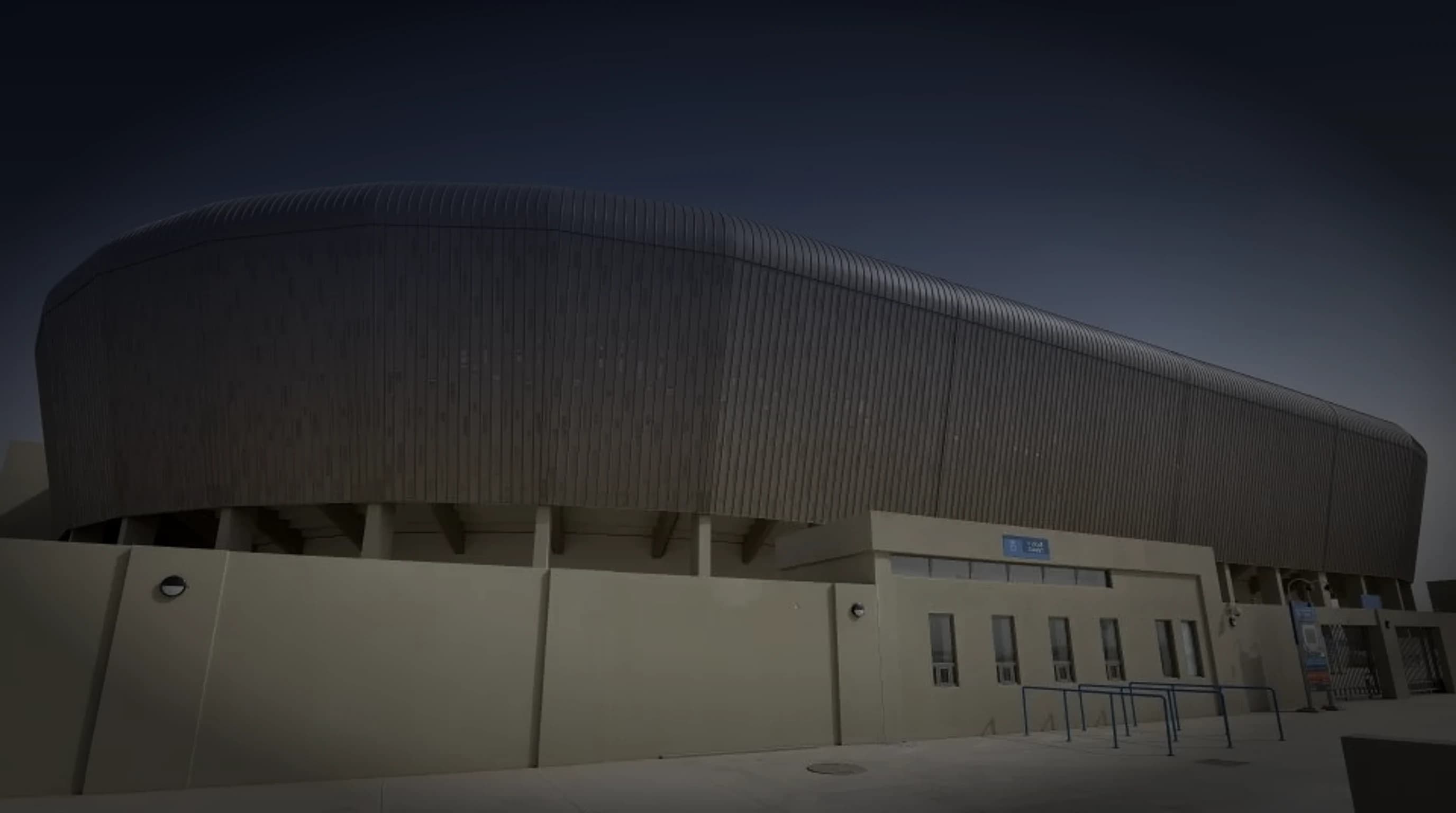
Riyadh · Saudi Arabia
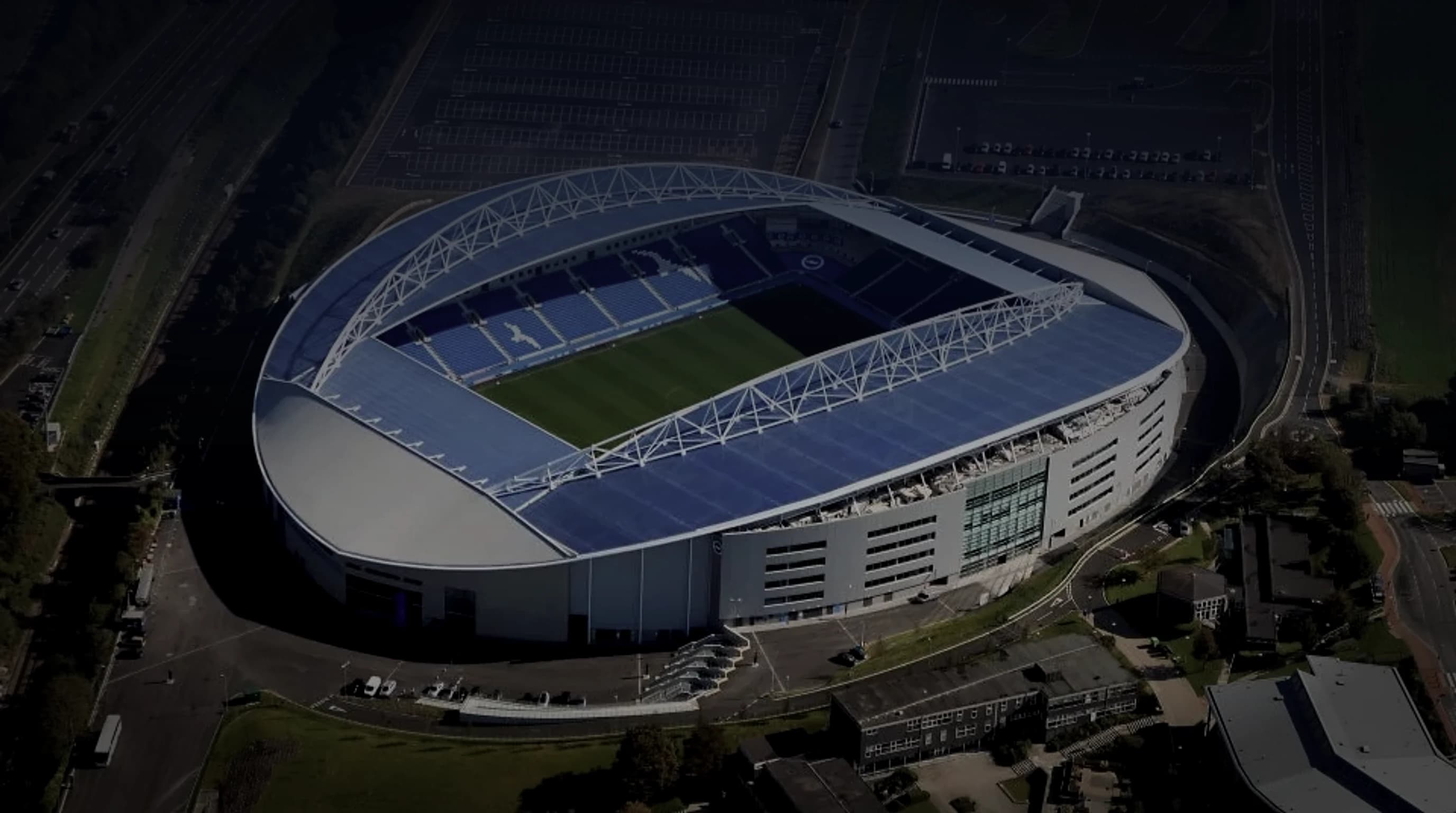
Brighton · United Kingdom
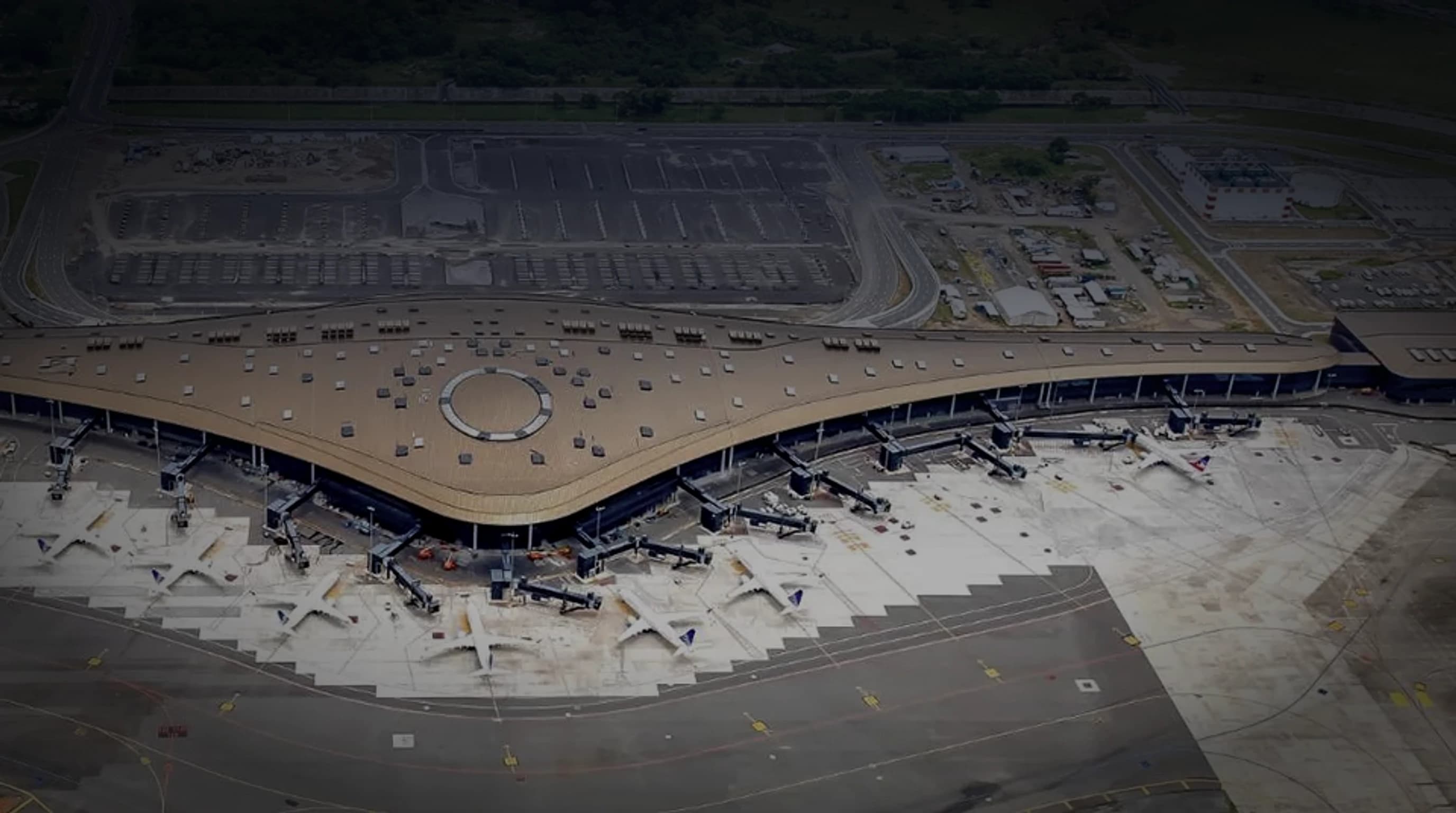
Panama City · Panama
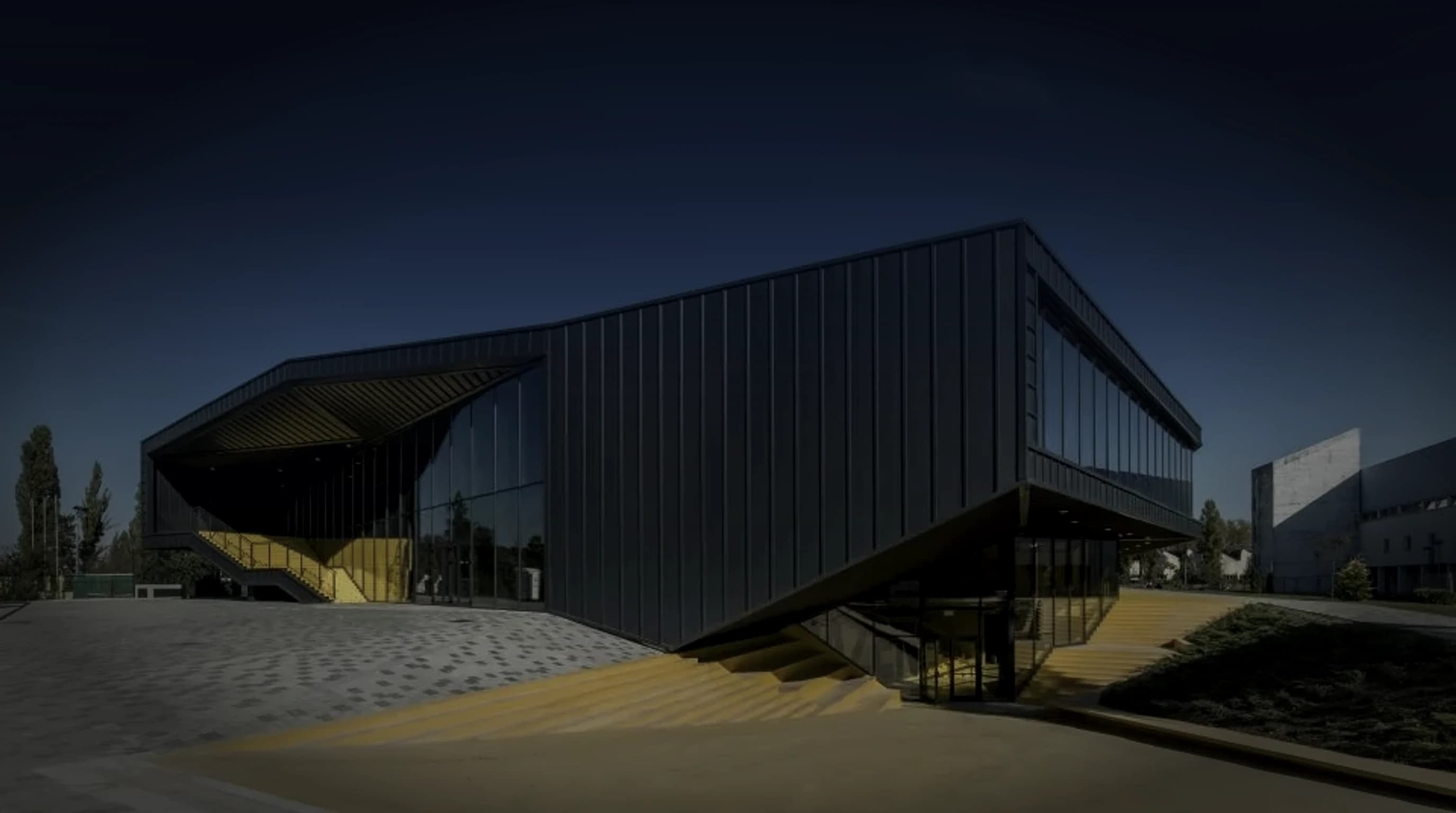
Vukovar · Croatia
Frequently asked questions
If your question isn't listed, write to us — we reply within one business day.
Riverclack is an Italian patented standing-seam roofing system in which the metal envelope is never perforated. Adjacent aluminium panels are joined mechanically by foot pressure during install, using a patented lock with a concealed plastic clip and an integrated drainage channel. No screws, no rivets, no holes in the roofing membrane.
Riverclack SpA is an Italian manufacturer founded in 1987. Production is in Italy. Over 18.4 million m² of roofing has been installed across 35 countries using the patented lock geometry.
The regional flagship is Adnan Menderes Airport in İzmir — a long-span international terminal with a continuous Riverclack aluminium standing-seam roof. Across the wider region: Houari Boumediene Airport (Algiers), Enfidha-Hammamet Airport (Tunisia) and King Saud University Stadium (Riyadh) — each delivered as a single watertight Riverclack blanket without through-perforation of the metal.
Three key differences: (1) the patented lock joins panels with no through-perforation — no screws, no rivets; (2) a drainage channel is integrated into the lock geometry, eliminating ponding risk on flat roofs; (3) the minimum slope is 0.5% for 500/550 mm panels (5% for the 600 mm sheet) versus 7–10% for classical standing-seam, and the bending radius reaches R 3 m for curved roofs.
Roof — the base standing-seam roofing system; Facade — concealed-fix façade cladding; Solar — BIPV photovoltaic modules clamped to the seam with no drilling; Green — trafficable green-roof build-up with a six-layer composition over the aluminium base.
Minimum slope is 0.5% for 500/550 mm panels; 5% for the 600 mm sheet (versus 7–10% for classical standing-seam). Bending: the sheet self-curves above R 25 m without permanent deformation, and is mechanically roll-bent at the factory down to R 3 m convex / R 8 m concave. This makes domes, elliptical pavilions and complex curved shells possible as a single continuous system.
Base material is aluminium alloy EN AW 5754-H18 (recommended thickness 0.7 mm), also copper, zinc-titanium and stainless steel on request. Panel widths 500 / 550 / 600 mm. Panels are roll-formed on site to a continuous span up to ~18 m without transverse overlaps.
Terra-Zenith is the official Riverclack SpA dealer for Türkiye and regional markets. Supply from Riverclack's Italian factory, detail engineering and warranty service are all managed from a single point of responsibility.

Tell us the building type, area and architectural concept — we will send a preliminary bill of quantities and detail proposal within 48 hours.