
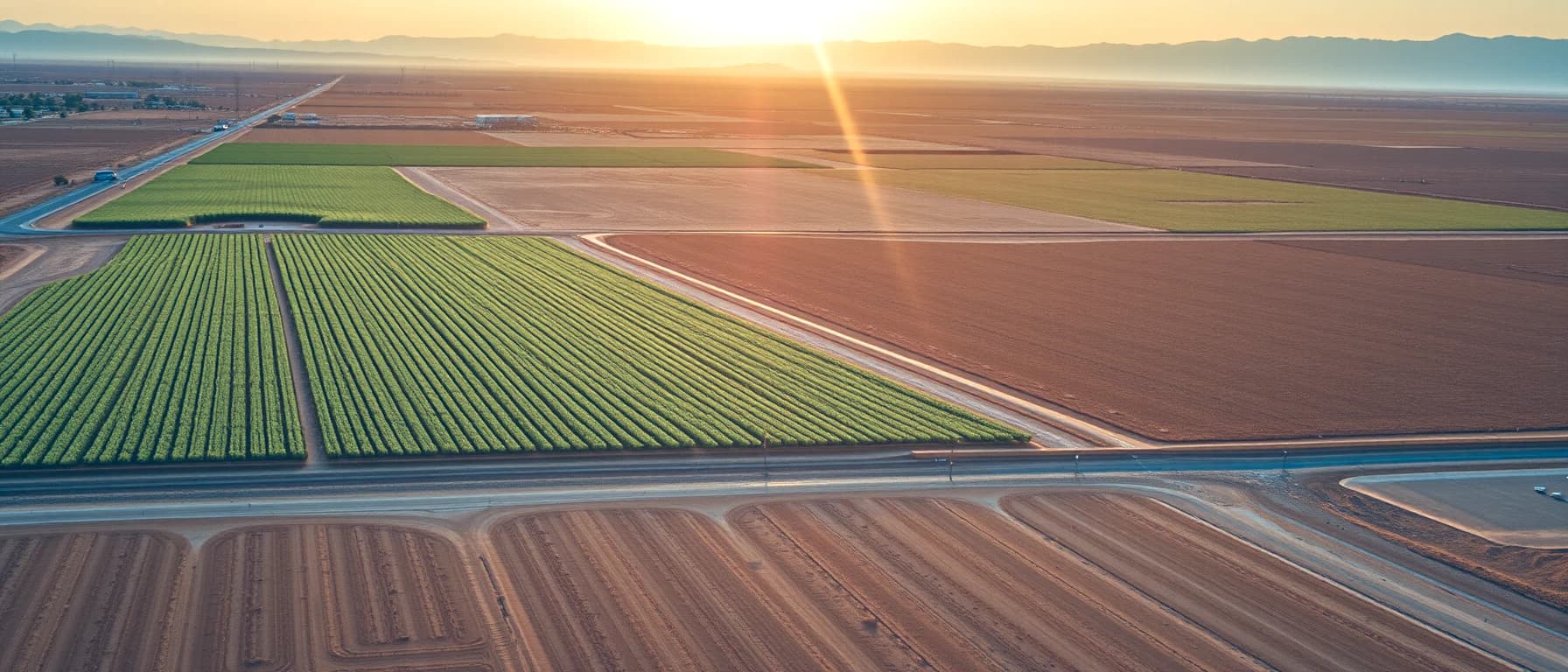
Subsurface drip irrigation for sustainable agriculture in Russia.
Russia is the world's largest sunflower producer, a top-3 wheat exporter, and a major sugar-beet, potato, and soybean producer. The bulk of that output sits in the southern chernozem belt — Krasnodar, Stavropol, Rostov, Voronezh, Volgograd — and along the Volga basin. Across the last decade, these regions have experienced measurable drying trends: lengthening summer drought windows, declining river flows, and earlier snowmelt that reduces effective spring soil moisture.
Why southern Russia needs efficient irrigation
Russia is the world's largest sunflower producer, a top-3 wheat exporter, and a major sugar-beet, potato, and soybean producer. The bulk of that output sits in the southern chernozem belt — Krasnodar, Stavropol, Rostov, Voronezh, Volgograd — and along the Volga basin. Across the last decade, these regions have experienced measurable drying trends: lengthening summer drought windows, declining river flows, and earlier snowmelt that reduces effective spring soil moisture.
Within this picture, irrigation efficiency is a direct input to national agricultural output and food security. Subsurface drip irrigation is the lowest-water-use technology among current irrigation methods. Indicative water-use ladder per hectare: surface irrigation ~10,000 m³, sprinkler ~6,500 m³, conventional surface drip ~4,000 m³, subsurface drip ~2,600 m³. Versus surface drip — the typical comparator on modern farms — field-observed savings range 35–55%, averaging around 48%. It also delivers 30%+ yield uplift, lower pump energy, and a minimum 15-year service life.
Why southern Russia needs efficient irrigation
Per-capita annual water (m³): Russia 4,500; world average 7,600. While Russia is not water-scarce on a national basis, the southern grain belt experiences a strong seasonal water deficit — summer rainfall on the steppe and chernozem regions averages 50–60 mm during the critical crop-development window, well below the 150–200 mm required for unirrigated stable yield.
Sunflower and winter wheat — the two leading Russian field crops — both have sensitive flowering and seed-fill stages that coincide with the peak drought period (July–August). Without supplemental irrigation, yield variance from year to year can exceed 30%.
- Russia (south)1.600 m³
- Iran1.700 m³
- España2.418 m³
- Russia (national)4.500 m³
- World average7.600 m³
Russia's southern grain belt experiences strong seasonal water deficit — efficient irrigation is a national-water-security input.
Sustainability advantages of subsurface drip
- Surface irrigation10.000 m³/ha
- Sprinkler6.500 m³/ha
- Conventional drip4.000 m³/ha
- Subsurface drip2.600 m³/ha
For the same yield, subsurface drip uses 74% less water than surface irrigation.
1) Evaporation loss drops below 3% (vs 20–35% in surface drip); water reaches the root zone directly. 2) Fertigation enters the root zone with the irrigation water, eliminating surface runoff — fertilizer use efficiency rises 25%+ and fertilizer leaching to rivers and groundwater falls. 3) Surface drip infrastructure requires annual lay-out and recovery; subsurface systems run 15+ years, dramatically reducing plastic production and waste cycling.
4) Subsurface delivery keeps soil surface dry, suppressing weed-seed germination — herbicide use drops. 5) Dry surface lowers bacterial and fungal disease pressure, a meaningful plant-health advantage on humid Kuban summers.
| Surface drip | Subsurface drip | |
|---|---|---|
| Evaporation | 20–35% | <3% |
| Fertilizer efficiency | baseline | +25% |
| Weed pressure | high | low |
| Service life | 1 season | 15+ yr |
| Energy use | baseline | −54% |
Evaporation, fertilizer efficiency, weed pressure and lifecycle — four components, decisive gap.

Freeze-thaw durability for Russian winters
A buried drip line installed at 40–80 cm sits well below the typical frost depth across southern Russia and the Volga basin. Validated through repeated freeze-thaw cycles, the GEOFLOW PE line resists embrittlement and micro-cracking that would damage a shallow-buried or surface system. Winter draining is automated through air-release and drain valves at the line lows.
Safely reusing treated water below ground
Industrial sites, livestock complexes, and municipal treatment plants in Russia generate treated water that is suitable for agricultural and landscape irrigation. With conventional spray or surface drip, treated water creates odour, hygiene, and human-contact risk. The WASTEFLOW line eliminates these risks because it is buried; its internal Geoshield™ liner prevents bacterial biofilm formation inside the emitter.
Water savings / yr
Subsurface delivery brings water directly to the root zone; surface evaporation drops to near-zero.
"Within this picture, irrigation efficiency is a direct input to national agricultural output and food security. Subsurface drip irrigation is the lowest-water-use technology among current irrigation methods. Indicative water-use ladder per hectare: surface irrigation ~10,000 m³, sprinkler ~6,500 m³, conventional surface drip ~4,000 m³, subsurface drip ~2,600 m³. Versus surface drip — the typical comparator on modern farms — field-observed savings range 35–55%, averaging around 48%. It also delivers 30%+ yield uplift, lower pump energy, and a minimum 15-year service life."
Frequently Asked Questions
Is the 48% water savings figure real?
Yes. Reduced evaporation (32% → 3%), zero surface runoff, and uniform distribution are the primary components. Field-observed savings range 35–55%; 48% is the average.
What is the payback period?
3–7 years depending on crop, water tariff, and energy cost. High-value orchards (walnut, vineyard, apple) typically pay back in 3–4 years; field crops in 5–7 years.
Will the line survive Russian winters?
Yes. At 40–80 cm burial depth the line sits below the typical southern-Russia frost depth and is validated through freeze-thaw cycles down to −35 °C. Winter draining is automated.
Carbon footprint impact?
54% lower energy consumption (pump load drops), reduced indirect emissions from fertilizer production, and lower plastic waste together reduce a typical 50-hectare site's annual carbon footprint by 40–80 tonnes CO₂-equivalent.
Design a sustainable project
Share your site and goal — we'll model the annual water, energy, and cost savings of subsurface drip for your specific case.