
Voronezh Oblast
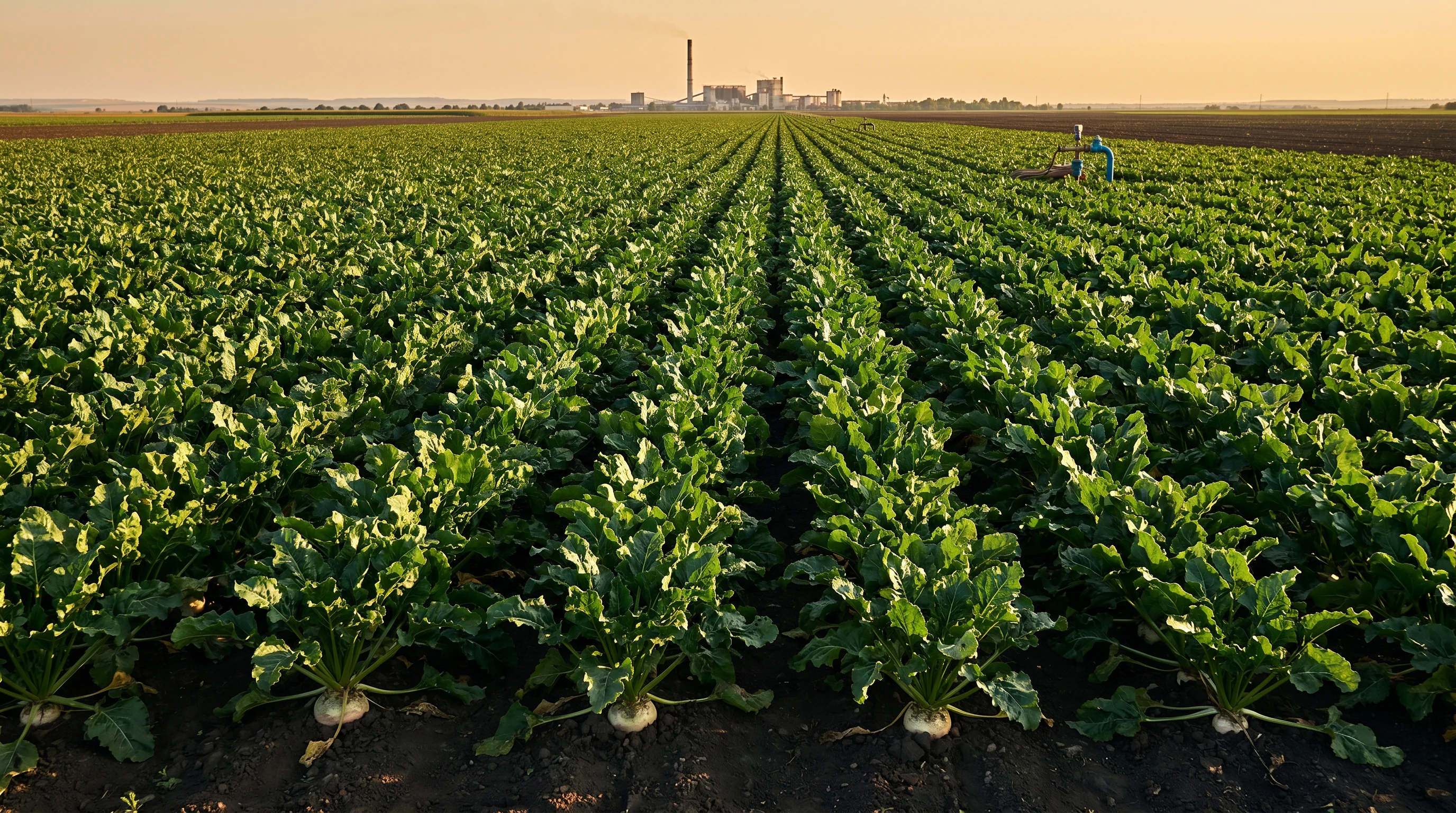
Voronezh Oblast — subsurface drip irrigation for sugar beet and grain.
Voronezh Oblast is the heart of Russian sugar-beet production. 4.0 million hectares of farmland on typical and ordinary chernozems with humus horizons 80–120 cm, approximately 80,000 ha under sugar beet annually. The largest Russian sugar factories — Prodimex Group, Sucden, Rusagro — operate here, and for them stable raw material with high sugar content is the basis of margin.
Voronezh is also a major winter wheat zone (1.4 M ha), soybean (180k ha, growing crop), and sunflower (480k ha). Over 2014–2024 the region experienced moderate precipitation decline (−15 to −20% versus the prior 30-year baseline) with sharply increased inter-annual variability. Subsurface drip irrigation here is the instrument for stabilising beet sugar content and gross yield, and protecting wheat and soybean through peak heat.
Climate and soils — what matters for design
Voronezh is the northern chernozem belt. Mean annual temperature +6.5 to +7.5 °C, active-temperature sum 2,600–2,900 °C·days. Summer is moderately hot: July +22…+24 °C mean, peaks to +35 °C; winter moderately cold: January −6…−9 °C, absolute minimum −30 °C once every 10–12 years.
Soils: typical chernozems (44% of farmland), ordinary chernozems (28%), leached chernozems (16%), grey forest in the north (10%). Best soils in Russian agriculture — humus to 120 cm, vast natural fertility. But April–June drains the reservoir, and without irrigation the peak sugar-fill phase runs in deficit.
Frost line on Voronezh chernozem 100–120 cm, significantly deeper than standard GEOFLOW burial (25–35 cm). For Voronezh, deepening the line to 30–35 cm is mandatory plus early drainage (mid-to-late October). GEOFLOW PE is validated to −35 °C, covering the Voronezh absolute minimum.
Sugar beet — regional flagship
Voronezh leads Russian sugar-beet production (about 5 M tonnes annually at 480–520 dt/ha). Rainfed output already runs high, but the critical variable is **sugar content**: the difference between 17% and 19% means 80 vs 95 kg of sugar per tonne — driving the price premium on the procurement contract.
Subsurface drip raises sugar content 1.0–1.5 percentage points while stabilising gross yield at 550–620 dt/ha. Design parameters: depth 25–35 cm, lateral 45–60 cm (two tapes per 90 cm row spacing, or one per 45 cm at 60 cm spacing), emitter 25–40 cm, flow 1.0–1.6 L/h. Seasonal norm 500–700 mm across 14–18 events focused on July (root fill phase).
100 ha 2026 economics: investment 40–50 M₽. Gross-yield uplift +70 dt/ha (480 → 550 dt/ha) plus sugar +1.2 pp delivers 7.5–9.0 M₽/year revenue uplift in sugar at current raw-material prices. Payback 5–7 years without subsidy, 3–5 years with reclamation state support.
Winter wheat — quality stabilisation
Voronezh wheat: 4.0–4.8 t/ha rainfed, traditionally class 3–4 by gluten. With subsurface — 6.5–7.5 t/ha with gluten rising to class 2 (26–28%). Especially relevant for districts selling through Voronezh and Lipetsk milling complexes — class 2 premium of 3,000–4,000 ₽/tonne. See /blog/winter-wheat-yield-deep-dive for details.
Design parameters: depth 25–35 cm (deeper than Kuban standard due to deeper frost), lateral 30–45 cm, flow 1.0–1.6 L/h. Voronezh specific — high autumn rain intensity makes drainage easier (spring start-up may skip main flushing).
Soybean — growing crop
Voronezh expanded soybean area 2.5× between 2018 and 2026 — from 70k ha to 180k ha. Fastest growth in the entire Central Federal District. Soybean on chernozem delivers 2.0–2.6 t/ha rainfed, but the critical phase — pod fill in August — almost always coincides with rainfall deficit.
Subsurface raises soybean yield to 3.2–4.0 t/ha. Design parameters: depth 20–30 cm, lateral 60–90 cm, emitter 30–50 cm, flow 1.0–1.6 L/h. Seasonal norm 400–650 mm peaking July–August. For rotation projects the same infrastructure can serve soybean four years after install for beet or wheat.
Logistics and project support
Terra-Zenith serves Voronezh from Moscow with regional partnership for fast field response (4 hours from Moscow). Standard delivery 7–14 days. A Voronezh specific is the large concentration of sugar holdings, for which we offer framework contracts with fixed pricing for 2–3 seasons forward.
Documentation for Voronezh projects often includes a submission to the Oblast Agriculture Ministry's "Reclamation Development" program. Terra-Zenith prepares the package (technical project, cost estimate, extracts) in formats agreed with the Voronezh agriculture authority.
Key crops
Consistent root moisture through fill stage — higher sugar content and gross yield in Voronezh, Lipetsk and Kursk regions.
Early-spring moisture without waterlogging — root protection under temperature swings on southern Russian chernozems.
Drought protection at critical flowering and pod-fill stages — reliable yields in Kuban and the Far East.
Stable water supply through seed fill — higher oil content and 1000-seed weight across Stavropol, Rostov and Voronezh regions.
Frequently Asked Questions
How does deep frost (up to 120 cm) affect winter system operation?
A line at 30 cm depth freezes in moderately cold winters. This does not damage it — PE is validated for −35 °C freeze-thaw cycles. Only water in the line at freezing is critical. Mandatory autumn drainage mid-to-late October (earlier than Kuban) resolves it.
Minimum sugar-beet project size that pays back in Voronezh?
From 40 hectares. Beet is a high-revenue crop, the economics work on relatively small areas. Below 40 ha, fixed costs of pump station and filtration are too high — the project becomes unprofitable.
Can one system serve beet → wheat → soybean → wheat in rotation?
Yes, and it is recommended. Standard 4-year rotation: beet → wheat → soybean → wheat. The same subsurface system serves all four seasons, regime adapted per crop. Significantly improves project economics — infrastructure amortises across 4 crops, not one.
What is the effect on beet root development from deep subsurface delivery?
Positive. Beet develops a powerful taproot to 1.5–2 m depth under correct irrigation. Subsurface delivery encourages root growth into the irrigation zone, increasing root mass. Surface irrigation creates a shallow root mat — less efficient.
Any specific considerations for Voronezh sugar holdings?
Yes. Sugar-beet processors often require raw-material certification under external compliance programs (brand audits for subsidiaries of international groups). Terra-Zenith provides irrigation passport and specifications compatible with those programs.
Which beet hybrids respond best to subsurface drip?
Modern hybrids from KWS, Maribo, Sesvanderhave, Strube show excellent response. High-sugar (Z-type) hybrids especially — subsurface delivers their sugar potential without losing gross weight.
Forecast for your beet or wheat project
Describe crop, area, current rainfed yield and sugar content — we return a design solution and 10-year economic projection within 48 hours.