
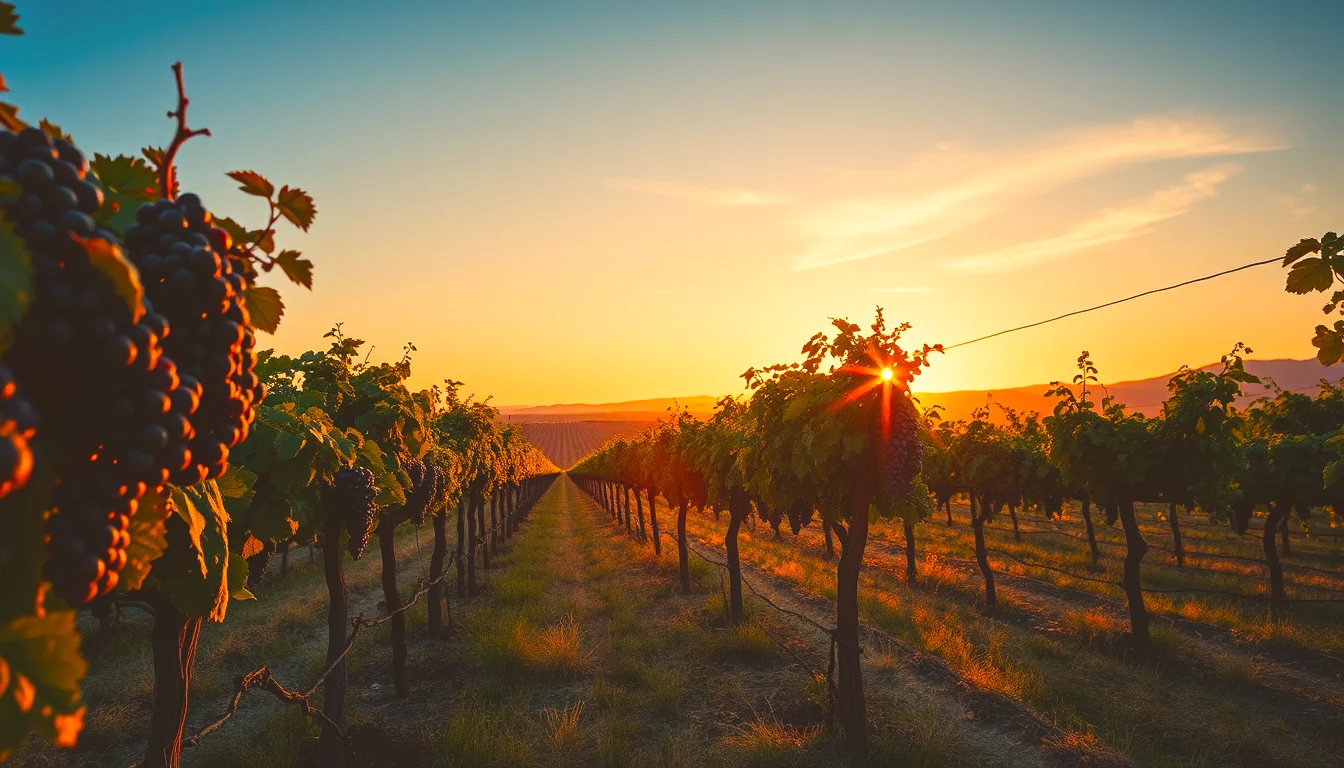
Krasnodar Krai
Krasnodar Krai — subsurface drip irrigation for vineyard, apple, and grain.
Krasnodar Krai leads Russian agriculture in yield and revenue per hectare. Taman and Anapa vineyards, intensive apple orchards in Dinskoy and Ust-Labinsky districts, sunflower and winter wheat across Starominsky, Kanevskoy, and Kushchyovsky — each one operates on chernozem with a rare combination of warmth and (historically) adequate rainfall. Since 2014 the picture has shifted: April–June precipitation dropped 18–22% and peak-heat temperatures climbed 1.5–2.2 °C. Yield increasingly depends not on what was sown, but on whether water is available in the critical window.
Subsurface drip irrigation is the most efficient way to close that gap on the Kuban. On Taman vineyards it stabilises the berry and raises sugar 2–3°Brix; on intensive apple orchards it doubles class-1 yield; on sunflower it delivers a 25–35% uplift over rainfed. Terra-Zenith designs, supplies, and installs systems across the krai — from coastal Taman to steppe Kushchyovsky.
Kuban climate and soils — what matters for design
Kuban is among Russia's warmest regions. Mean annual temperature +11 °C, active-temperature sum (>+10 °C) of 3,400–3,800 °C·days — 1.5× the central belt and comparable to northern Italy. The 7–8 month growing season supports industrial production of warm-loving crops — grape, peach, apple, late sunflower.
Dominant soils: typical and ordinary chernozems (52% of farmland), leached chernozems (24%), grey forest and alluvial soils (20%), with solonetzic patches on the coast. Humus horizon 60–120 cm — a deep reservoir that stores winter moisture. But April–June drains the reservoir, and without irrigation the wheat fill and grape berry-fill windows arrive depleted.
Frost-line depth on Kuban chernozem is 60–80 cm. A GEOFLOW line buried at 25–40 cm can freeze in moderately cold winters (January to −12 °C). The solution is mandatory autumn drainage via LIN auto-drain valves (see /learn/freeze-thaw-durability). GEOFLOW PE material is validated by Geoflow Türkiye through 300 freeze-thaw cycles down to −35 °C — manufacturer warranty covers every Russian climate scenario when the protocol is followed.
Taman and Anapa vineyards — the flagship
The Taman peninsula is one of Russia's top terroirs: 38,000 ha of vineyard, sandy and chestnut soils, Mediterranean climate. Kuban-Vino, Chateau de Talu, Fanagoria, and dozens of mid-sized estates operate here. The main pain point is berry split from sudden moisture swings (July rain after two dry weeks) and uneven sugar across slope rows.
GEOFLOW removes both. Burial 25–40 cm, lateral spacing 180–280 cm (one tape per row), emitter spacing 40–60 cm, flow 1.0–1.6 L/h. Seasonal norm 400–700 mm fractionated to 12–18 events. ASSIF pressure-compensating emitters equalise across slope, delivering identical water to top and bottom rows. **Expected results on Taman chernozem-chestnut soils** — based on the Geoflow Türkiye international network (20 vineyard projects, 600 ha across the Aegean): sugar 23–25°Brix (vs 20–22 rainfed), cluster mass +12–18%, expandable export grade. Russian pilot projects 2026 — first season under way; results publish as growers approve disclosure.
For Taman the decisive factor in emitter choice is anti-siphon. The peninsula is calcareous — after pressure release, water can pull carbonate particles back through the emitter. ASSIF and VERED both have mechanical anti-siphon; for Taman this is Terra-Zenith's standard recommendation.
Intensive apple orchards — Dinskoy and Ust-Labinsky
Over the past decade Kuban has become Russia's industrial apple epicentre: Sad-Gigant, Gulkevichsky Nursery, Kuban-Sad — collectively over 7,000 ha of intensive orchards reaching commercial harvest in year 3. Cultivars Gala, Golden Delicious, Red Chief, Pinova all demand stable moisture during fruit fill.
Subsurface design for an intensive orchard: depth 40–60 cm, lateral 200–350 cm (one tape per row), emitter 50–75 cm, flow 1.6–2.3 L/h. Seasonal norm 500–800 mm over 20–28 events. Key advantage — fertigation through the line: apple is intensely responsive to potassium in fill phase, and subsurface delivery lifts K-use efficiency 25–30% vs surface application.
The dominant benefit for intensive orchards is class-1 yield share. Rainfed delivers 60–65% of fruit at class 1 (65+ mm diameter). With a subsurface system this rises to 80–85%. At current premium-grade prices this is a 35–50% gross-revenue lift with tape investment paying back in 3–4 years.
Sunflower and grain — northern districts
Northern Kuban (Starominsky, Kanevskoy, Kushchyovsky, Leningradsky) is classical corn-sunflower-wheat country. Agroholdings here operate 5,000–30,000 ha each, and a subsurface decision rests on per-hectare ROI. On sunflower — 25–35% uplift over rainfed at 400–600 mm seasonal norm. On winter wheat — stabilised 7–8 t/ha (see /blog/winter-wheat-yield-deep-dive).
For a 100+ ha field project Terra-Zenith designs GEOFARM high-flow tape at 1.6–3.5 L/h and 70–100 cm spacing (one tape per 2 sunflower rows). Main-line infrastructure is GEOPVC DN 200–315 PN 12.5 with 50-year warranty. Borehole or open-channel intake — pick by proximity.
Logistics and project support
Terra-Zenith serves Krasnodar Krai from the Moscow office with a regional field team — engineers for site survey and commissioning reach any krai location within 4–6 hours. Standard delivery from stock: 7–14 days. Non-standard GEOPVC diameters (DN 630–1200) ship in 4–8 weeks production lead time.
EAEU paperwork (TR TS declaration, ST-1 certificate of origin, sanitary-epidemiological conclusion for drinking-water GEOPVC) is fully on Terra-Zenith's side. For state-support applications we prepare the technical project and cost estimate in agency- and bank-ready formats.
Key crops
Direct delivery to the root zone on Taman and Kuban vineyards — no surface evaporation.
Industrial intensive orchards of Krasnodar and Kabardino-Balkaria — fruit-size uniformity and an extended marketable season.
Stable water supply through seed fill — higher oil content and 1000-seed weight across Stavropol, Rostov and Voronezh regions.
Intensive orchards of the Krasnodar region — custom irrigation programs for fruit size and shoot renewal.
Early-spring moisture without waterlogging — root protection under temperature swings on southern Russian chernozems.
Frequently Asked Questions
Does subsurface drip work on Taman sandy soils?
Yes, with regime adjustment. Sandy soils hold less water, so more frequent, shorter cycles — 12–18 events per season vs 8–10 on chernozem. Emitter spacing tightens to 40 cm. Depth 25–30 cm (deeper sends water below the root zone).
Minimum project size that pays back on Kuban?
Vineyard — from 5 ha (3–4 year payback). Apple — from 10 ha (3–4 years). Sunflower — from 30 ha (5–7 years). Winter wheat — from 50 ha (5–7 years with state-support subsidies). Smaller projects exist but payback extends beyond 10 years.
How do systems winter through Krasnodar's relatively mild cold?
Frost line 60–80 cm typically sits below the tape (25–40 cm) — residual water in the tape freezes. Mandatory autumn drainage via LIN auto-valves resolves it. GEOFLOW PE is validated by Geoflow Türkiye through freeze-thaw cycles down to −35 °C; the warranty applies when the protocol is followed.
Can I launch a system in spring 2027 starting the design now?
Yes. Design + supply: 4–6 weeks. Installation: 2–4 weeks by area. Ordering Sep–Nov 2026 gives a March 2027 launch for vineyard or a Nov 2026 launch for winter wheat ahead of seeding.
Which documents are needed for a reclamation subsidy?
Technical reclamation project, cost estimate, register extract for irrigation-equipment importers, copies of TR TS declarations, supply and installation contract. Terra-Zenith provides 5 of 6; the farm operator brings the originals specific to their entity.
Are there reference projects I can visit?
The Geoflow Türkiye international network includes 50+ projects and 2,000+ ha under subsurface drip (see /references) — site visits to Aegean reference projects can be arranged. Russian pilot projects launched in 2026 are still early-stage; access is coordinated separately with the participating farms.
Request a Krasnodar-specific project quote
Describe crop, area, and water source — we return a preliminary design and cost estimate within 48 hours, tuned to the climate and soil of your district within the krai.